Of all the animals of prey, man is the only sociable one.
Every one of us preys upon his neighbour, and yet we herd together.
The Beggar's Opera: John Gay

Wednesday, 19 April 2023

Alas, poor Yorvik!

I knew it, Horatio. Or, in its modern guise, I thought I did; the Minster, the Shambles, the Japanese prints in the Museum and the gardens next door, a stroll along the river Ouse and afternoon tea at Betty’s (or, if the queue is too long, the quirky little tea shop in College Street, all chintz bunting and mis-matched antique china). However, as a recent weekend trip has shown, that’s not all there is to it these days.

The first inkling that things had changed since we were regular visitors was a peculiar noise as we walked into the city centre for dinner, a discordant far-off howling which gradually resolved itself into - arguably - ‘Wonderwall’ being painfully mangled in a variety of different keys and with a certain valiant disregard for tempo. The culprits turned out to be a busker (actually quite good) and a large crowd of mini-skirted, over-painted and clearly very drunk women, which came as something of a surprise, given that it was not yet 7pm.

As we drew nearer, more women appeared round corners or out of the numerous bars lining the street, waving their arms enthusiastically in the air as they joined in and bawled an approximation of the lyrics at parties approaching from the opposite direction. Their various accoutrements - matching T-shirts or sashes (necessary, perhaps, to stop them drunkenly wandering off with the wrong herd), light-up deely-boppers and bridal veils - confirmed our suspicions that we had somehow ended up in what amounted to a hen party-themed circle of Hell.

Thanks to its small size, car-free streets and easy accessibility by rail, York has apparently drawn the very short straw of becoming one of Britain’s most popular hen party venues. Numerous companies compete to promote it as a destination, offering organised activities ranging from the sweetly innocuous (dance, cookery and chocolate-making classes) via wine-tastings, river cruises and bar crawls to the downright prurient and sniggeringly salacious. Among the latter is a male life-drawing class, marketed - or pandered - with a queasy ‘nudge-nudge, wink-wink’ spiel which, at a stroke, degrades centuries of classical art to cheap titillation in a spectacularly apt metaphor for our times.

From our window table in a quiet restaurant, we could see more groups making their way from the station, helium balloons and headdresses bobbing above the crowd, their unsteady progress suggesting that the merry-making had already started in earnest on the train - either that or their high heels were causing them trouble on the cobblestoned street. The make-up colour of choice appeared to be day-glo orange, accessorised with over-sized lip fillers which, combined with some bold sartorial choices, gave the wandering parties more than a passing resemblance to shoals of brightly-coloured tropical fish prowling the nooks and crannies of a coral reef.

By the time we finished our meal, the busker was still gamely plying his trade - Robbie Williams’ ‘Angels’ this time - but his audience, while still caterwauling along, were now looking distinctly the worse for wear; a number of them were leaning for support on nearby buildings and bollards or, less successfully, their companions, and several more had collapsed onto the damp pavement, while a couple were quietly sobbing in the gutter, apparently overcome by emotion (or, more probably, a surfeit of Prosecco cocktails). It was with a palpable sense of relief that we left the city centre, pausing briefly to assist an unwisely stiletto-shod young woman who had fallen over on a busy crossing and was struggling to right herself unaided in the face of oncoming traffic.

I suppose the number of marauding hen parties suggests that marriage is not as uncommon or outmoded as some social commentators would have us believe - unless, of course, young women have decided to dispense with the tedious marriage bit and are simply signing up for an evening of Bacchanalian excess for the fun of it (which would, I suppose, be nothing new - although, in the ancient world, there was usually a mitigating religious dimension to the revelry). It is sad, however, to see what is otherwise a remarkably agreeable and attractive historic city being so abused and it must be truly terrible for the local residents who bear the brunt of the late-night noise, crowded streets and antisocial behaviour on a weekly basis.

Wednesday, 12 April 2023

“Do you talk more when it’s dry?”


Fans of John Wyndham may recognise this quote from ‘The Day of the Triffids’. One summer evening in the days before the disaster, the narrator and a colleague at the triffid farm where he works are listening to the rattling noise made by the thousands of tethered plants in a nearby field. The colleague, a plant expert, suggests that the noise, rather than a random effect of the weather as Mason thinks, may actually be a form of communication. Although Mason is initially sceptical, later events cause him to re-evaluate the theory.

I was reminded of this scene by the news, a couple of weeks ago, that scientists have recorded hypersonic ‘clicks’ given off by plants under stress and are putting forward the theory that these noises can convey information about the condition of the plant. While the researchers concentrated on dehydrated tomato plants, there is also footage of a rather disgruntled-looking cactus wired for sound and emitting a definite clicking or popping noise.

This is not the only triffid analogy in the news; nearly ten years ago, I quoted from the book in response to a story about plants being engineered to produce omega-3 fatty acids hitherto found only in fish oils and animal products using genes from marine algae (technically neither plant nor animal). Since then, successful trials have led to the proposed feeding of the new oils to farmed fish and poultry and to the beginning of the process to approve them for for mass production for human consumption.

In Wyndham’s 1951 novel, which is starting to look alarmingly prescient, the origin of the triffids lies in the manipulation of plant DNA to produce a vegetable oil which far outperforms the best fish oils. When specimens appear worldwide, a large industry quickly springs up to exploit the benefits of this new - if somewhat problematic - crop; it is this abundance of lethal triffids on Home Counties farmland which renders the United Kingdom particularly vulnerable to the subsequent global disaster, one in which the triffids’ ability to communicate, albeit at a basic level, plays a significant role.

Bearing this in mind, it is, perhaps, a little unsettling to read that there is currently an application in place to grow GM Camelina Sativa plants which have been engineered to produce this new fish oil substitute on open-air agricultural stations in Suffolk and Hertfordshire.

What, as they say, could possibly go wrong?


As an aside, 1951 was something of a vintage year for novels, giving us not only the triffids but also ‘Foundation’, ‘The Cruel Sea’, ‘The Daughter of Time’, ‘Nightrunners of Bengal’, ‘The Catcher in the Rye’ and many others.

Saturday, 8 April 2023

“Go and play in the traffic!”

The long tradition of April Fool news stories in mainstream outlets seems to be in abeyance thanks to the internet - in any case, there are now so many odd and surreal news items out there that the odd spaghetti tree would probably slip through unnoticed (I rather like the conspiracy theorists’ explanation that switching on the Large Hadron Collider precipitated us into a parallel and comparatively insane universe).

This one had my antennae twitching but, as far as I can see, it first appeared six days after the crucial date:

Giant coloured spots appeared on Norman Way in Colchester, with locals told that the “temporary street art” was intended to encourage children to walk or cycle to the nearby school.

Quite apart from aesthetic considerations - the colour combination is frankly nauseating - and the distraction for drivers, decorating the road surface with the same brightly-coloured designs used widely in school playgrounds suggests that the designers have little or no practical knowledge of child behaviour.


The spots are part of a Healthy School Streets initiative on the part of the Council - savour those capital letters: a sure sign there’s a PR company or quango involved somewhere - designed to reduce and control traffic around schools. It’s the sort of project guaranteed to appeal to high-ups who want to be seen to Make a Difference and just the sort of idea likely to be swapped around at conferences (Head Teachers are prone to the same kind of thing, making schools doubly 
vulnerable).

The timing is interesting, to say the least; ‘temporary’, yet right at the start of the Easter holidays - and a month or so before the local elections. The overall impression is that the peasants should shut up and not interfere when their betters decide to act for their good:
A spokeswoman for Essex Council [...] said residents were consulted on the idea. They said 74% agreed with the principle of setting up School Streets in Colchester.

Doubtless this survey was carried out with the help of the usual leading questions - ‘Do you agree with our plan or would you prefer to see more horrible road accidents involving children? - and the residents agreed in principle without being given any clear indication of the form the measures would take. Certainly one local Councillor, who memorably described the results as ‘Teletubby land’ says she was not shown the design in advance.

For me, though, the oddest aspect is the stated aim of ‘encouraging children to walk or cycle to school’. For one thing, the design is limited to a small area and youngsters are hardly likely to find a few coloured spots on the road at their destination sufficient incentive to warrant walking all the way and, more to the point, surely deciding the means of getting to school is up to their parents, at least until they are of an age to find the brightly-coloured circles embarrassingly infantile and patronising.

If I am wrong, and it is really children who are deciding whether to walk or drive to school at an early age, the results could be interesting; if parents have abdicated responsibility to that extent, will they have the discipline or authority to prevent their infant offspring from succumbing to the lure of the ‘attractive’ street art and jumping into the road?

Saturday, 1 April 2023

Pleading the Belly

Back in the days of the death penalty, our forebears recognised that executing a pregnant woman raised a certain moral difficulty. The solution they arrived at was allowing the convicted criminal to ‘plead her belly’; a woman sentenced to death but proving upon examination to be carrying a child could have that sentence deferred until after she had given birth.

In practice, whether through merciful reconsideration or administrative cock-up, records show that these women often escaped execution altogether and ended up committed to prison or transportation instead or even being pardoned, providing a powerful incentive for any woman detained on suspicion of a capital crime to get herself knocked up as soon as possible. (This presented certain practical difficulties in all-female prisons but the problem was not insurmountable; ‘The Beggars’ Opera’, which inspired this blog, features a Newgate servant whose side hustle is (pro)creating the means for female criminals to escape the hangman’s noose).

There was an interesting throwback to pleading the belly this week thanks to lawyers for one of two women - or ‘thug mothers’ as the Mail memorably put it - who pleaded guilty this week to affray. It’s certainly not a pretty picture:

...they turned up at their victim's home at 6.30am and pelted her with eggs. Wright, 29, stamped on the victim's legs, while Jones, 33, kneed her in the head and tried to pour vinegar in her eyes.

The guilty plea didn’t leave much for counsel to do but one advocate, at least, did have a go at justifying his fee:

Mr Brody, mitigating for Jones, said his client is heavily pregnant. He added: 'The defence counsel together believes this doesn't reach the custody threshold. Ms Jones is pregnant, she cannot go to prison. 

I’m not an expert, but a quick Google suggests that ‘cannot’ is doing quite a lot of heavy lifting here. In fact, there appears to be no statutory requirement for the judge to take pregnancy into account when sentencing and there are several mother and baby units in UK prisons, making it unclear exactly why Mr Brody would make such an unequivocal (and technically incorrect) statement.

The judge confirmed that the custody threshold had not been met and, in the absence of previous convictions, handed down community and restraining orders, telling them to ‘count themselves lucky’ - something of an understatement, given the premeditation implied by a 6.30am house call furnished with a bottle of vinegar and a box of eggs.

Since the offence took place in 2020 and the women have been aware since the preliminary hearings in 2021 that they would be standing trial in Crown Court, it raises some interesting questions about this suspiciously opportune pregnancy - and, however humane their intentions, about the possible consequences of success for the current campaigns to prevent pregnant women being sent to jail at all.

Wednesday, 29 March 2023

The Cradle of the Revolution

The title of this post comes from road signs around the Chateau de Vizille, in south-east France; while every area tries to find something to boast of on the brown promotional roadside panels (spare a thought for Selongey, which can’t manage anything more exciting than ‘Birthplace of the pressure cooker’), the numerous additional official signs for Vizille, with its Museum of the Revolution, suggest it is a source of local and national pride.

Recent events across the Channel have prompted a number of comments about the French tendency to adopt violent protest as a first measure rather than a last resort, suggesting that this is because of the impact on the national psyche of having had a revolution in the past. I’d go further; what happens every year on July 14th is not merely a commemoration of historical events but an occasion to take to the streets and rejoice, despite the fact that the Revolution, founded in ideals of Liberty, Equality and Fraternity, quickly degenerated into horrific brutality, mob violence and calculated mass murder. When you have been brought up to applaud a history like that, what’s a bit of stone-throwing or arson between class enemies?

Back when I was teaching French, our regular end-of-year project for year 8 was based on an information pack published in France for foreign children studying the language. A cheerfully colourful comic strip booklet told the story of the Revolution, from the anti-royalist riots in Grenoble which began it all and the storming of the Bastille to the months of the Terror - complete with graphic depictions of the guillotining of Louis XVI and Marie Antoinette - followed by instructions for making tricolour rosettes and Liberty bonnets out of crepe paper. There was even a cassette and a songbook so that pupils could join in with ‘La Marseillaise’ and learn ‘Ça ira’, the anthem of the sans-culottes, with its lilting dance-tune and jolly refrain, ‘To the lampposts with the aristocrats/ ...we will hang them!’ (although mercifully it did, at least, omit the final lines; ‘And when we’ve hanged them all/ we’ll shove a spade up their arses’).

Since the young generally have an insatiable appetite for the gorier bits of history, it’s easy to see how French schoolchildren, provided with similar teaching materials as part of their national curriculum, could accept the violence of the Revolution as a matter of course; it’s those of us who discover the details as adults who are made queasy by descriptions of the unspeakable behaviour of the bloodthirsty mob and the callous attitude of the intellectuals who provided the driving force behind it. 

Those protesters destroying public property and attacking the police have been reared from an early age to admire and celebrate a movement which, in addition to regicide and the mass murder of thousands (including children) purely because of their antecedents, eventually turned on its own and killed dozens of eminent social reformers, scientists and writers, men and women alike, who shared the same ideals but dared to criticise the direction events had taken and the atrocities being perpetrated in the name of Liberty, Equality and Fraternity.

If ever there was a culture in the so-called civilised world which turned out citizens primed and ready for mass protest and violence, surely this is it.


As an aside, the last Bastille Day celebration I attended in France coincided with the local Fire Brigade’s annual knees-up (which started at 4pm after the parade). By the time the town fireworks got going at 11.30pm, most of the firefighters had been drinking for over seven hours, which was unfortunate as a stray rocket set fire to the roof of the nearby chateau.

I shall long cherish the spectacle of the duty fire engine stuck firmly in the castle gateway while its (sober) driver speculated aloud about the ancestry and personal habits of the two inebriated colleagues who had tried to direct him through the narrow entrance.


Wednesday, 22 March 2023

Bloody Cheek!

The classic example used to define chutzpah is a young man murdering his parents and then demanding that the court show mercy because he is an orphan. 

This week, I think I’ve found another, albeit on a lesser scale, from some members of the health workers’ unions. I’ve just had an email from the NHS blood people - I get these from time to time thanks to a relatively uncommon and particularly useful blood type - inviting me to make a donation as soon as possible. Like all their communications, it’s heavy on the emotional blackmail -‘save a life’, ‘we urgently need your help’’.

This urgency, they say, is because stocks are very low indeed due to bad weather and ‘industrial action’. The email doesn’t indicate whose industrial action is to blame, but a quick search confirms that, sure enough, there were blood donation staff joining the merry throng of NHS workers on the picket lines in the recent strikes.

That is their legal right, of course, but, given the unions’ claims that the system is already over-stretched and operating with minimal margins, it seems a bit much on the part of those who walked away from this ‘vital’ process and missed a couple of days of legalised vampiring (as well as costing management time to deal with the disruption) to expect the public to rush to make up the resulting deficit. 

Friday, 17 March 2023

‘...not with a bang but an insta’

It would, in a slightly perverse way, be comforting to think that, should our civilisation fail, the end would be brought about by something on a cosmic scale and completely beyond our control; a massive asteroid, perhaps, or an alien invasion.

Science fiction writers have added a moral dimension with inadvertently self-inflicted scenarios involving nuclear disaster, rogue AI or global pandemics spread by mass air travel, not to mention my personal favourite, triffids; less spectacular but there’s still a certain element of grandeur involved (except, perhaps, in the case of zombies).

Sadly, it’s looking more and more as if the end will be a combination of terminal dumbing down and bitter political infighting. With hindsight, we could have seen it coming; the internet gave us a tool beyond the wildest dreams of previous generations, so what did most of us do with it? Shopping, lolcats, belfies, hot and cold running Kardashians and all the rest (blogs too, of course).

Above all, the social media genie, once out of the bottle, has set about undermining our society from within, providing the perfect medium for narcissism, misinformation, witch-hunts and denunciations, all played out in public for the delectation of the masses - the perfect counterpart to the circuses of the Ancient Romans. 

The instantaneous knee-jerk posturing of social media is fuelling an increasing polarisation as our society fragments into tribes - us (right) and them (wrong) - according to one’s opinion on the issue of the day; humans being what they are, it isn’t long before the tribe determines the opinion rather than the other way round. As far as Brexit, gender or the British Empire are concerned, we are effectively involved in wars of religion, whether we know it or not.

Worse still - since those are, at least relatively serious matters - is the growing infantilism recently embodied by news coverage of one Liana, who filmed herself on tiktok copiously weeping because some social media users had been rude about the name of her child (Koazy, since you ask) or the petty squabbles surrounding the antics of various footballers’ wives.

It’s all starting to look horribly like a fast track to hell in a handcart and, given the wedge of diversity staff and green policies being driven into every pillar of our social and material infrastructure, the collapse is gathering pace. We might be able to slow the decline - for a start, it would help if if Instagram’s estimated 1.47 billion users didn’t spend an average of half an hour a day gazing at their own and each other’s navels - but I suspect our time is up, just as it was for the Ancient Romans, the Aztecs or the Moche.

How humiliating, though, to descend into barbarism in such a trivial and meaningless way!

Monday, 13 March 2023

Lineker: biting the hand that feeds him

Politics and contract issues aside, I can’t help feeling that, for me, at least, the Gary Lineker affair boils down to a question of manners.

Lineker may or may not be directly employed by the BBC - the matter is currently under scrutiny as there’s a substantial potential tax bill involved - but his status as a paid pundit surely brings with it some social and moral obligations towards the organisation which offers him a weekly platform to exercise his specialist skills and whose metaphorical bread and salt he has eaten for decades.

It’s a bit like a wedding singer being found in the hotel bar after the reception making loud and occasionally offensive comments about the local mayor (even though the bride and groom have already asked him to stop); he may not be breaking any rules, but it does show a lack of respect for the bridal party and reflects badly on the people who who hired him.

There's something embarrassing about the whole business; this is a grown man with a successful media career employing the sort of Hitler-based comparison that was used as a last resort in acrimonious student debates back in the days of Margaret Thatcher (and my misspent youth). We used to call it ‘dropping the H-bomb’ - the nuclear option which effectively ended the discussion, since any attempt at remonstration could be howled down with gleeful cries of ‘fascist!’ (‘pig’ was an optional extra). 

It’s taken me all weekend to work out of what - or whom - all this was reminding me but I got there in the end...


Thursday, 9 March 2023

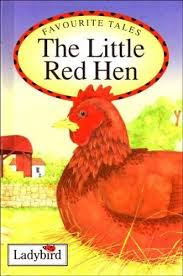
The Decline and Fall of the Little Red Hen


Once upon a time, this was my favourite book - which, judging by recent posts on Primary education websites, shows I was a precocious proto-capitalist; these days, if their approving teachers and parents are to be believed, children are likely (with, I suspect, some prompting) to say that the hen should have shared her loaf of bread with the other animals even though she did all the hard work to produce it.

It wasn’t just the satisfactory ending that appealed; like the other Ladybird story books of its vintage, it’s an aesthetic and linguistic gem, with detailed illustrations clearly drawn from life - the hen scratching in the dirt to plant the seeds is a delight - and a keen sense of rhythm pervading the text:
“Who will help me to plant these grains of wheat?”  asked the little red hen.
“Not I,” said the cat.
“Not I,” said the rat.
“Not I,” said the pig.  


By the mid 1990s, the style is very different. Gone are the lifelike animals and the lovingly-detailed rural settings; instead we have a flat and dreary cartoon with a corresponding lack of complexity. While the language remains relatively unchanged, the ‘other animals in the farmyard’ have become ‘her friends’; a patronising gesture in keeping with the simplification of the illustrations, all doubtless intended to make the book more ‘relatable’ for modern children.


Another couple of decades and the complex and detailed illustrations of the original have been replaced by a faux-naïf style in which the animals (the pig having been unaccountably replaced by a dog) have acquired clothing and are depicted in an anthropomorphic style oddly reminiscent of “The Island of Doctor Moreau”. The language, too, has been sadly debased:
“Will you help me to plant the wheat? “ asked Little Red Hen.
“No,” said the cat, the rat and the dog.
All these changes are, I fear, symptomatic of a wider malaise. I’ve often wondered how the sophistication of Ancient Roman art and literature could have given way to the Dark Ages and what it must have looked like to those living through the change.

Having seen what has happened to the little red hen in a scant fifty years, I think I am starting to understand.

Tuesday, 7 March 2023

Ex Libris

If you have a racist friend,” sang The Special AKA in the 1980s, “now is the time for your friendship to end”. In a climate where accusations of racism are flung about for the flimsiest of reasons, today’s Guardian readers presumably conduct regular purges of their address books to ensure their social contacts meet the requisite purity standards.

A while back, Julia had a piece at Orphans of Liberty quoting a Guardian writer who clearly applies the same methodology in other areas:

The big book purge began when I decided to go through the shelves and discard any book I was vaguely embarrassed to have in the house, for reasons of quality, subject matter, politics or author (look at your shelves and you probably have your own equivalents).”
Well, no, actually; by and large, if I choose to give a book house room then I will feel no embarrassment about it whatsoever. In the unlikely event of the writer of that article visiting my home, she would probably reach for the smelling-salts when faced with the collection which has absorbed most of my spare cash for half a century or more; from the ‘Just So Stories’ of early childhood to the vintage science fiction I discovered at 8 years old (scaring myself silly reading ‘The Day of the Triffids’ under the covers with a torch) and the ‘Boy’s Own’ adventure stories I loved in my teens, there’s enough politically incorrect material there to ensure no Guardian reader would ever speak to me again.

While some of these writers express prejudices and opinions which would no longer be acceptable in polite society, I see no reason to deny myself the pleasure of revisiting old favourites as a result. An open-minded reader will surely neither approve nor ignore the outdated attitudes but simply accept them as a product of their time, much like the (to us) mawkish sentimentality that permeates late Victorian and Edwardian fiction.

Given what has recently happened to the works of Roald Dahl, I have no doubt that future editions of ‘Beau Geste’, ‘Prester John’ or ‘A Town Like Alice’ - if published at all - will be censored to better reflect today’s attitudes in the same way that old photographs and film posters have been altered to remove evidence of smoking; it would be hard to find a better metaphor for this intrusive nannying than the airbrushed images of Churchill and Brunel sans cigars.

It seems unlikely that we will ever reach a ‘Fahrenheit 451’ scenario (unless the Corbynites get into power, in which case we will have far worse things to worry about) but, should it ever come to an inquisition into the contents of our bookcases, I can’t be alone in saying that they will have to prise ‘King Solomon’s Mines’ (and all the others) from my cold, dead hands.

Friday, 3 March 2023

Not any more, Omar!

The Moving Finger writes; and, having writ, 
Moves on: nor all thy Piety nor Wit 
Shall lure it back to cancel half a Line, 
Nor all thy Tears wash out a Word of it.

The Rubáiyát of Omar Khayyám (FitzGerald translation)

Ah, simpler times! To compare the past - the domain of the ‘perfect’ tense in the sense of something finished and complete - to a piece of writing was once to acknowledge the permanence of the act of committing words or images to a surface.

It’s a pertinent reminder of the stability that our forebears experienced; to know that the past was  unalterable, even if recollections might vary. This was the security which Orwell showed being violated by the revisions conducted within the Ministry of Truth - a horrifying but distant dystopian vision for his 1940s readers which, 75 years later, is in danger of becoming an everyday occurrence.

We’ve long been accustomed to believing the evidence of our own eyes and, subsequently, the use of filmed or still images as proof. In the era of deepfake and AI generated imagery, we need to revise this urgently, but at least we have been abundantly warned of the possibilities.

Far more insidious is the alteration of texts stored on our own hardware. Nanny Knows Best has a chilling account of kindle owners finding that copies of Roald Dahl works they already owned have been subject to the recent much-publicised revisions without their knowledge or consent. It’s chilling to think that a kindle library - bought and paid for - could, at any time, be censored for violating today’s standards, regardless of the political or social climate in which it was written (and what, I wonder, would amazon do if asked at a future date to hand over details of customers with a liking for Rider Haggard, H P Lovecraft or John Buchan?).

It extends well beyond kindle, of course; the Tavern’s wise woman - 84, sharp as a tack and equipped with an eidetic memory - reports that BBC news stories which she has read in the early hours of the morning are often substantially altered by breakfast time, presumably as the day-shift editors arrive and contribute the correct spin. This being so, can we be sure that any past report has not been subsequently altered without trace?

How long do we have, I wonder, before this kind of thing spreads to society as a whole - or has it already done so? Having seen how medical records can be altered or disappear, I am willing to believe the same thing could happen with police, judicial and employment documents - to say nothing of Government records - leaving no trace except a history accessible only to technicians inside the organisation.

We’ve seen a lot of this quote from George Orwell recently, but, under the circumstances, I think it bears repeating as often as possible:

Every record has been destroyed or falsified, every book rewritten, every picture has been repainted, every statue and street building has been renamed, every date has been altered. And the process is continuing day by day and minute by minute. History has stopped.

Friday, 17 February 2023

Behind the World’s Biggest Bike Shed

Never having indulged in Facebook (for obvious reasons; as JuliaM puts it with admirable clarity, ‘Facebook and teachers - like matter and anti-matter’), it was something of a surprise to be asked about a recent celebration by someone who had seen me in candid pictures taken and posted by one of the guests, a mutual friend, who had also included a picture taken in front of my house. Not being signed up, I couldn’t be tagged by name, but I was still clearly recognisable to anyone who knows me by sight.

I appreciate that this makes me sound old-fashioned, but this felt like a major invasion of privacy. While I might equally well, in the past, have figured in printed photos shown to friends or colleagues, appearing in digital form online and reliant on someone else’s privacy settings makes me distinctly uncomfortable, particularly given the inclusion of my home (with associated geolocation).

I’ve long been uneasy about putting images in the public domain (so much so that, along with a handful of other die-hards, I refused to obey the Head’s diktat requiring individual portrait photos for the school website - I know how good some teenagers are with photoshop). It seems petty to be annoyed about it - and a snap of bunch of fifty-somethings chatting round a lunch table is hardly going to cause a sensation - but I do feel there is a principle at stake here.

This attitude is presumably incomprehensible to youngsters who, seduced by the lure of social media and the world of the influencer - not to mention numerous attention-seeking celebrities constantly pushing the boundaries of what is acceptable in the public domain - are constantly aiming for maximum online exposure. Unfortunately for them, the internet is an unforgiving place; put a picture of your youthful indiscretions online (or have one posted by someone else) and there’s no telling when it may come back to bite you.

There’s a good deal of sense in the words of a wise Headmaster (rare, but they do exist) who advised pupils not to post anything online which they would not be happy to see on the side of a bus driving down the High Street the next day. Sadly, staffroom anecdotal evidence suggests many teenagers take a very different attitude: in the words of one world-weary colleague, “It’s a full-time job trying to stop them putting their tits all over the internet”.

From long professional association with them, I’d argue that teenagers should be equipped with a sign on their foreheads reading ‘Under Construction’ to remind people - themselves included - that there is a great deal of essential rewiring happening inside, not least in the areas governing risk-taking and self-image. Once upon a time, unwary and over-bold adolescents might end up inside a sabre-toothed tiger; these days, they may well find themselves exposed, so to speak, on a global stage.

If Twitter is, in the words of the Tavern’s Wise Woman, ‘ the world’s biggest lavatory wall’, then the world of social media provides the digital equivalent of the school bike sheds as the scene of myriad nefarious activities intended mainly to show off to one’s peers and enjoy the thrill of breaking rules - with the significant difference that what happens there could now be available for all to see.

Time will tell whether this becomes a problem with future employers or partners - and the undiscovered country ahead includes the thorny question of how tomorrow’s children will react to seeing in glorious technicolour what their parents got up to in their salad days - but I, for one, am glad there’s no record out there of my irresponsible youth.